The cards
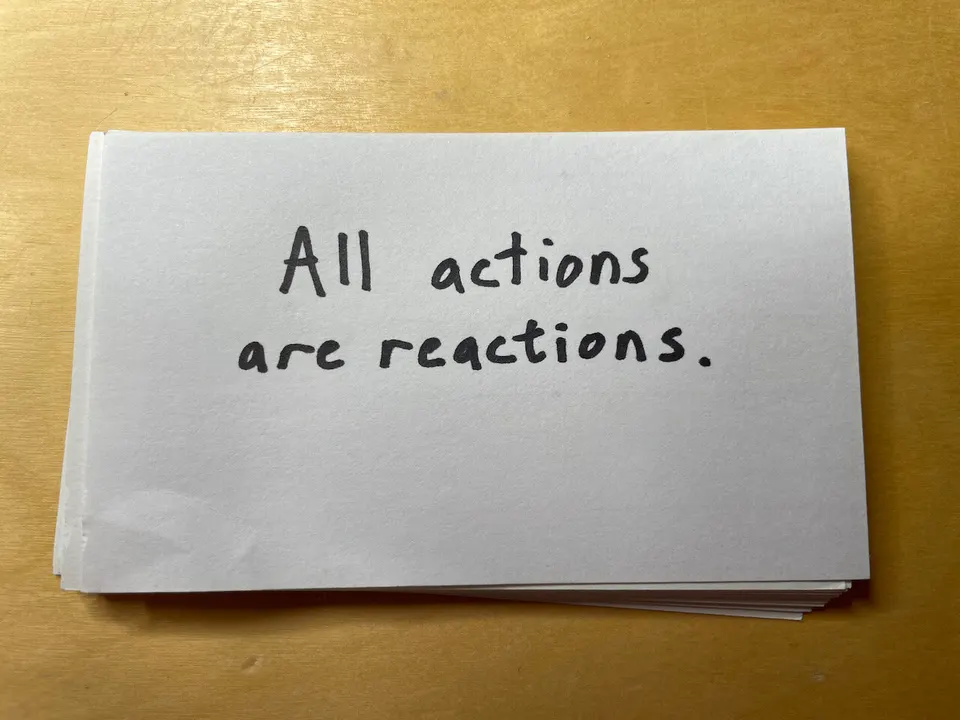
All actions are reactions.
Newton’s third law of motion states (idiomatically at least) that every action has an equal and opposite reaction. When this idea is combined with the limits of personal subjectivity, a simpler assertion arises. A chain of events, however inscrutable, produces every outcome—an exact combination of environment, habit, and of course fate. Account for these.
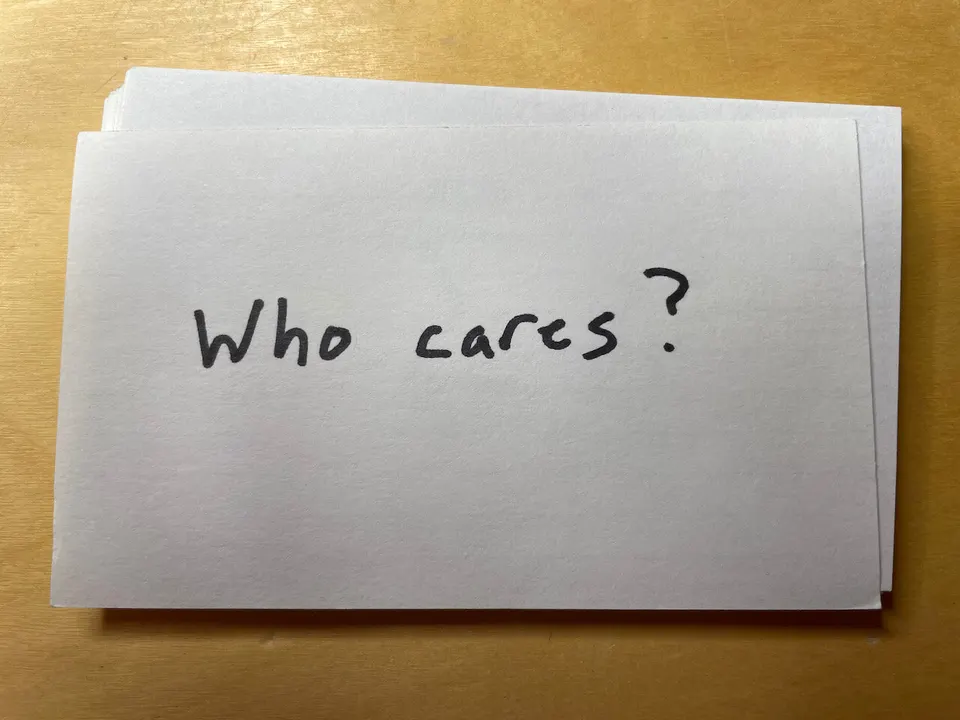
Who cares?
Do you? Does anyone else? Is it anyone you aim to please? Why are you doing this thing this way, as opposed to any other way or thing that could be done?
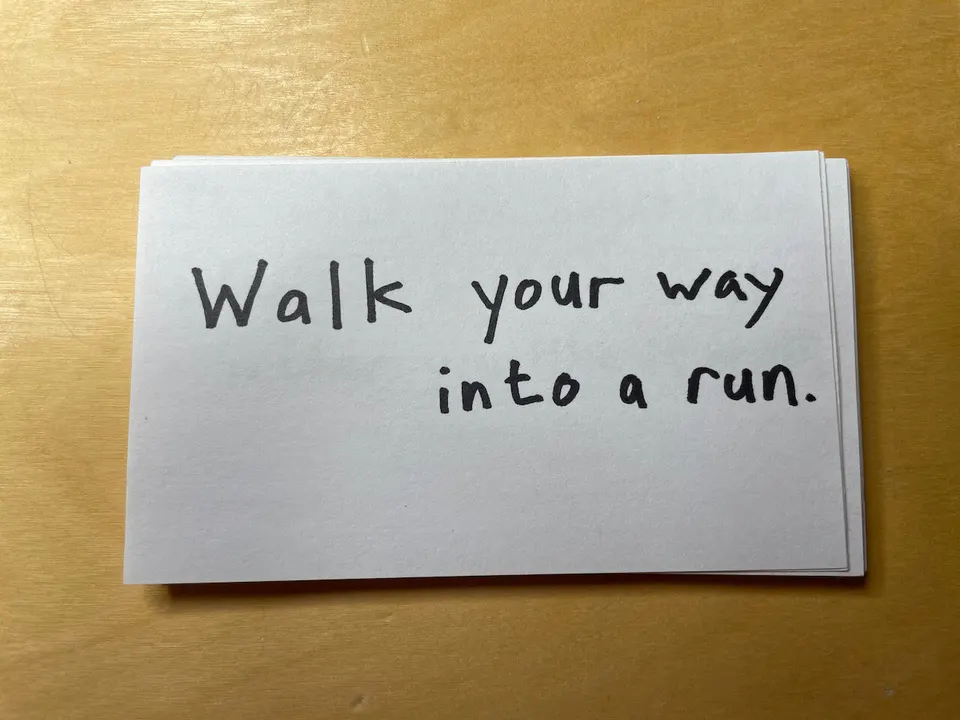
Walk your way into a run.
An action-oriented variant of the apprentice’s mantra: "first you get good, then you get fast”. Also see the military logistic’s adage: “slow is smooth and smooth is fast”. Speed is a byproduct of competency. It should only be forced under duress.
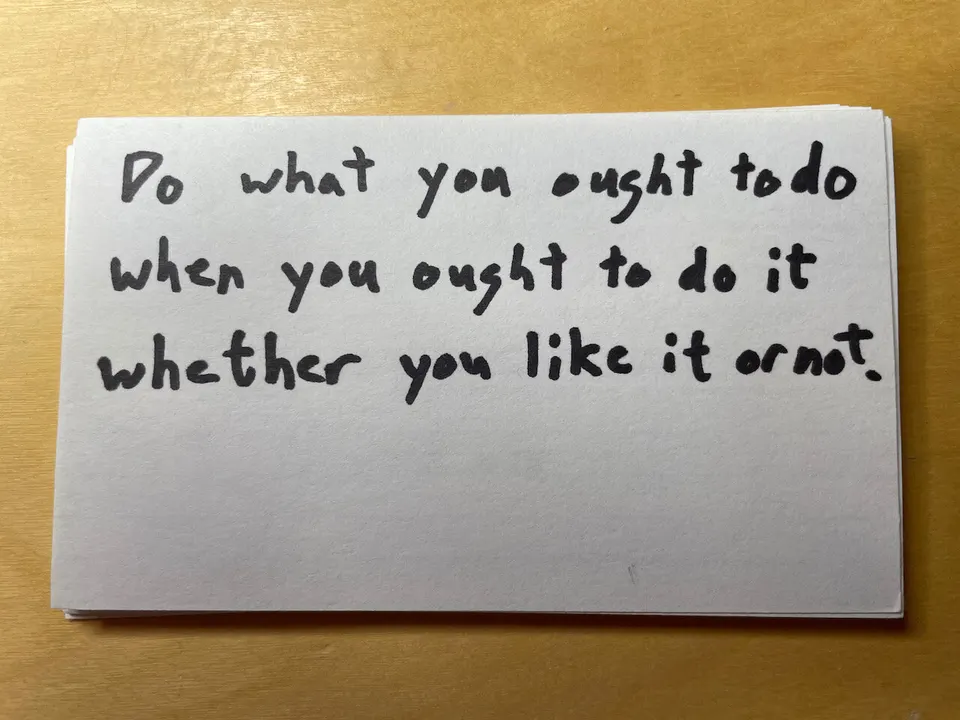
Do what you ought to do when you ought to do it whether you like it or not.
An adapted quote by Thomas Huxley about the “most valuable result of education”.
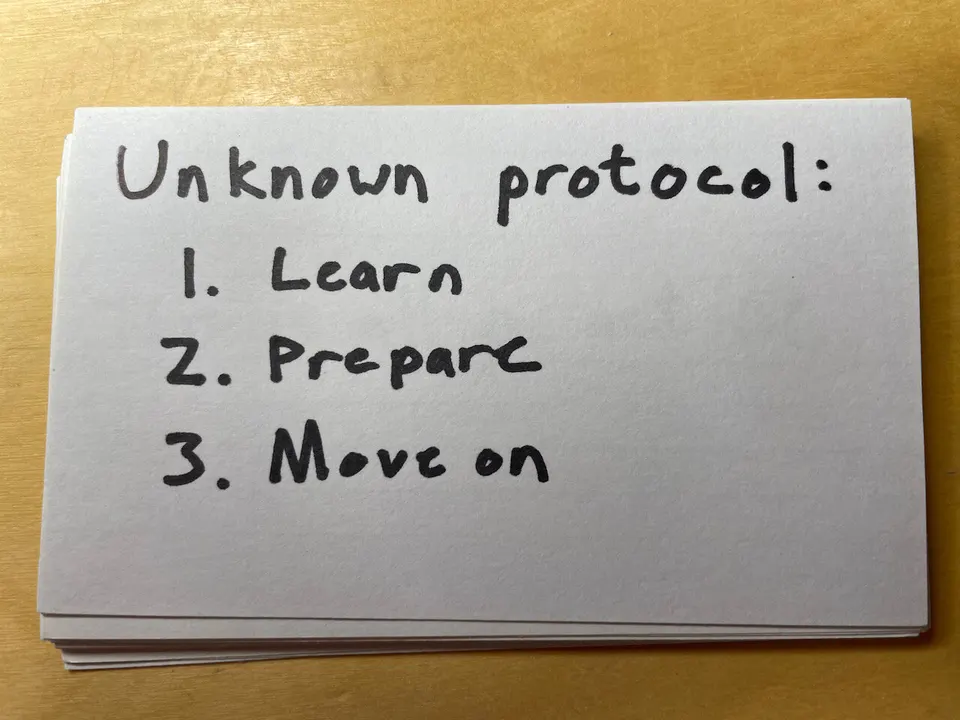
Unknown protocol
1. Learn. What about this unknown is, in fact, knowable?
2. Prepare. What about the remaining unknown can be mitigated or exploited?
3. Move on. The rest is out of your control.
This is all practice.
You do not know what tomorrow will bring. All you can do is prepare. All you will do is prepare, no matter what you choose to do.
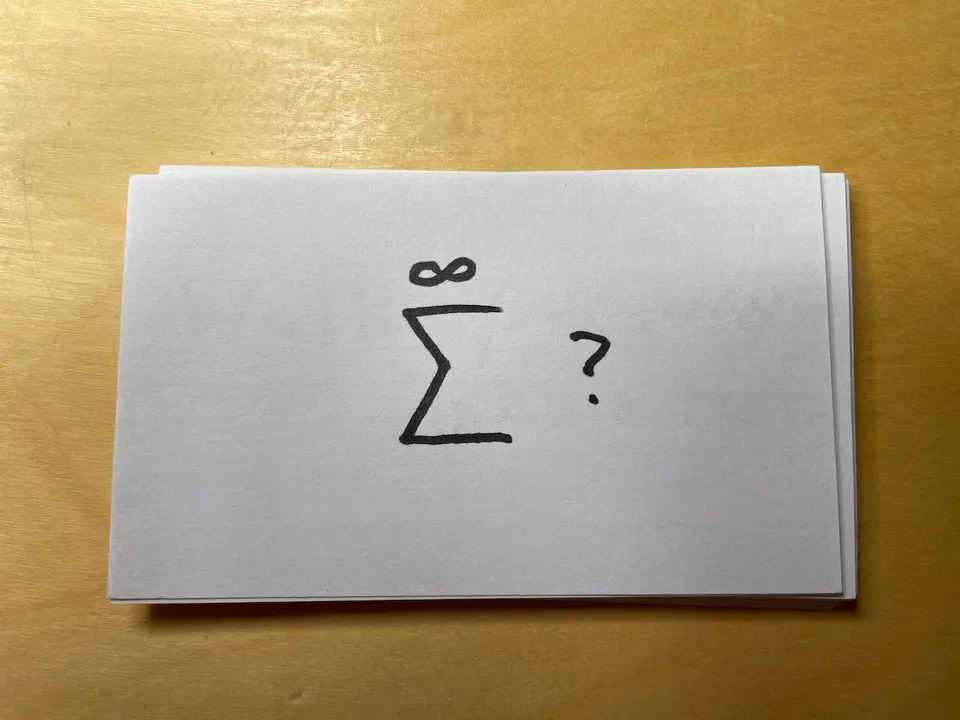
What is the sum over all?
What does this action amount to across time and space—every person it will touch, every thought it will provoke, every event it will trigger? What does it add up to?
Your only job is to help.
You’re a set of hands in a procession. The world is not resting on your shoulders. Do what you can.
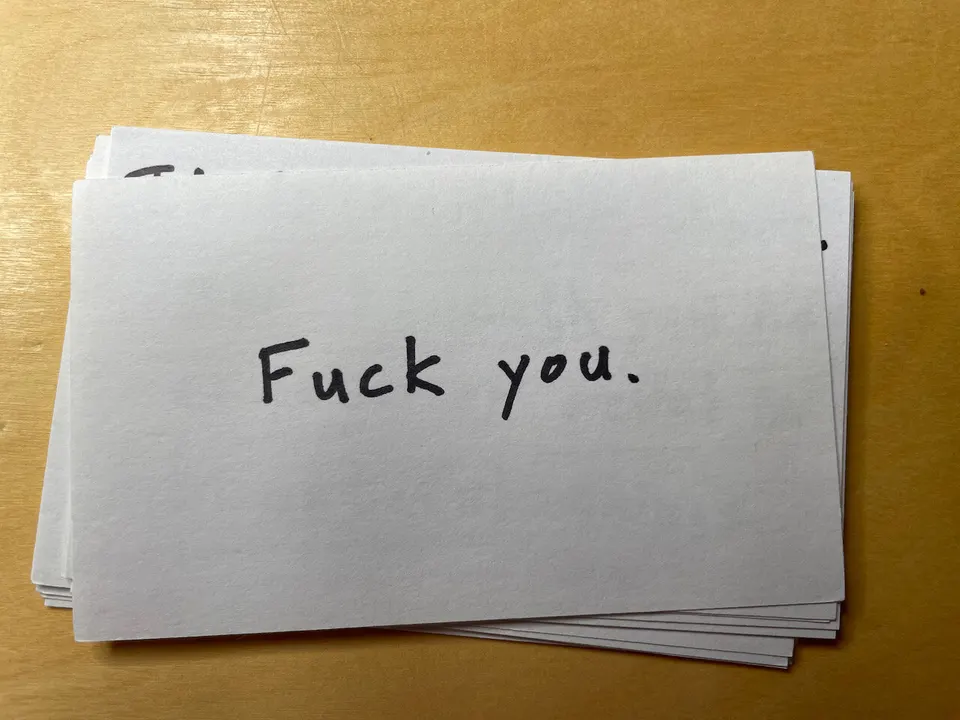
Fuck you.
Self-explanatory.
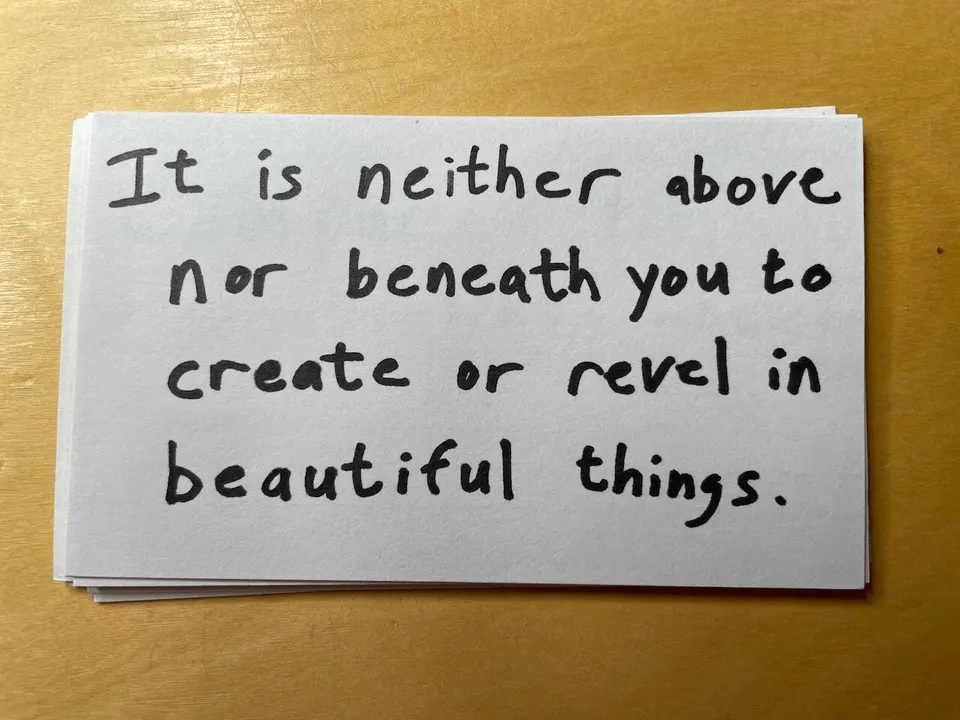
It is neither above nor beneath you
We live in an era of callous self-conscious observation. In keeping with our disdain for the numinous, we’re trained scoff at a magical moment in the making, out of fear you become an idiot for buying into a false one. Problem: life is irrelevant without those moments. You have nothing better to do than gamble on them.
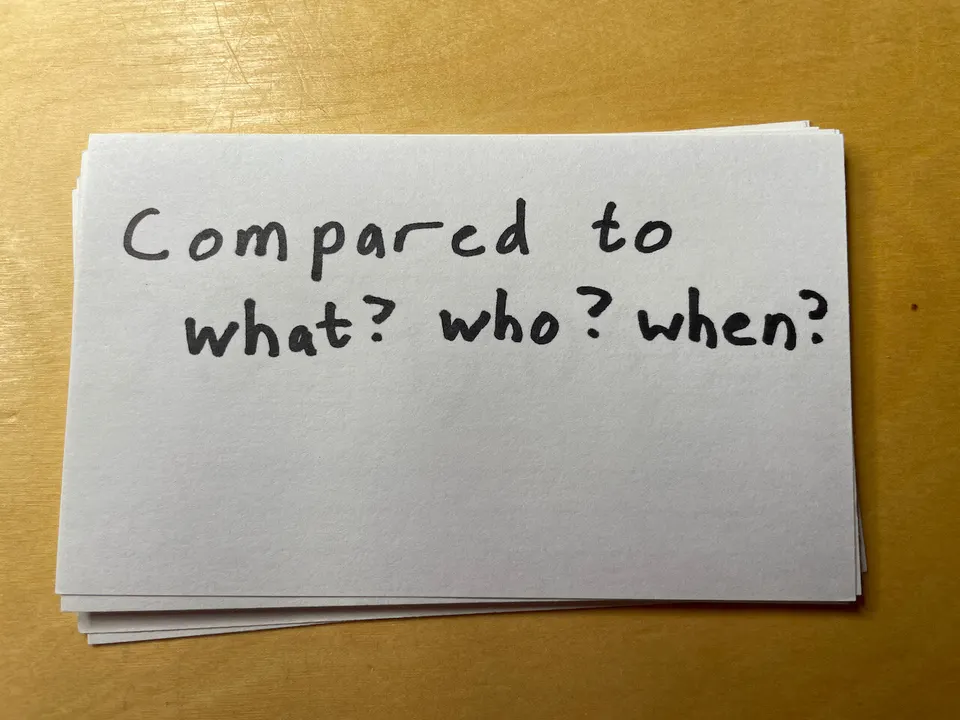
Compared to what? who? when?
A lot of psych literature recommends against comparing yourself to other people. This is stupid advice. Compare what you do to every conceivable measuring stick. You’ll get tired of the impossible and discouraging ones pretty quickly, leaving you a more intelligently calibrated grasp of where you are and what you’re trying to achieve.
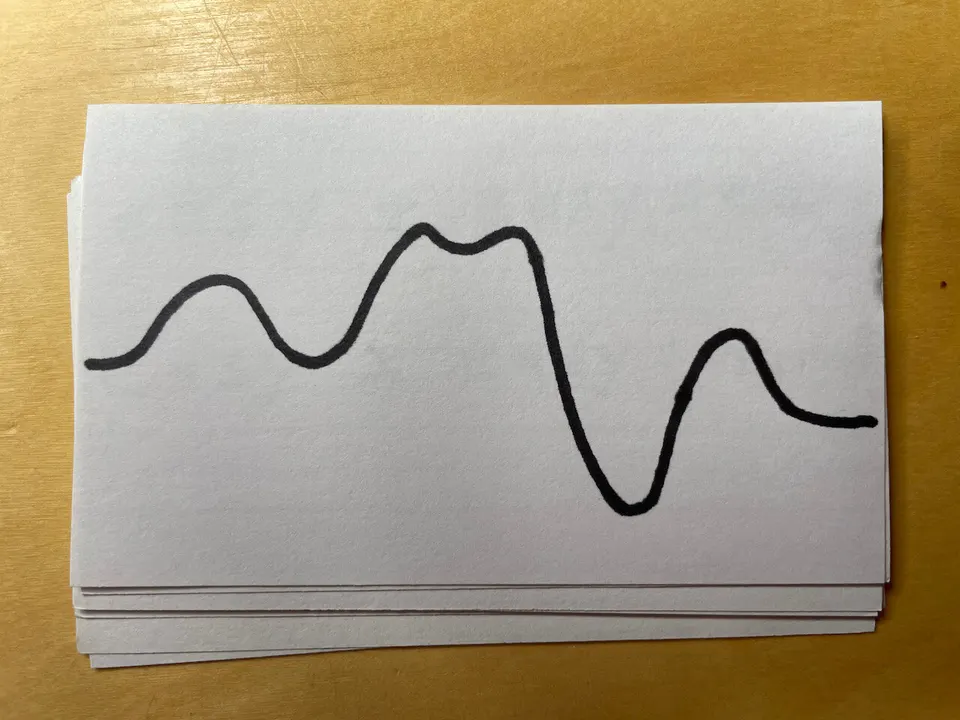
A sample strategy yield map
X-axis is a landscape of possible ways to solve a problem and y-axis is their efficacy. On the left you have your basic bell curve: a little optimizable hump where there’s a clear ideal to reach for. However, if you move to the right past the base of that hump, away from that particular maximum, you eventually emerge in a superior one. This superior strategy is bimodal, indicating two conflicting but equally useful approaches, both likely undergirded by an effective general principle. You will be tempted to vacillate between these modes and would be better off not wasting resources doing this, but even worrying about this waste is itself a waste of time: the fundamental strategy provides the vast majority of the gains. Off the right side of the objective maximum is a massive decline, indicating a possible danger in not meeting the challenge of the best solution (which is usually a tough line to toe, making this a risk worth considering). You can continue right from there into what is subjectively a big gain, but notice that even the highest point of this new strategy is only barely better than any point on the curve on the left.
These analogies apply far more often than you would think. Strategize, then optimize.
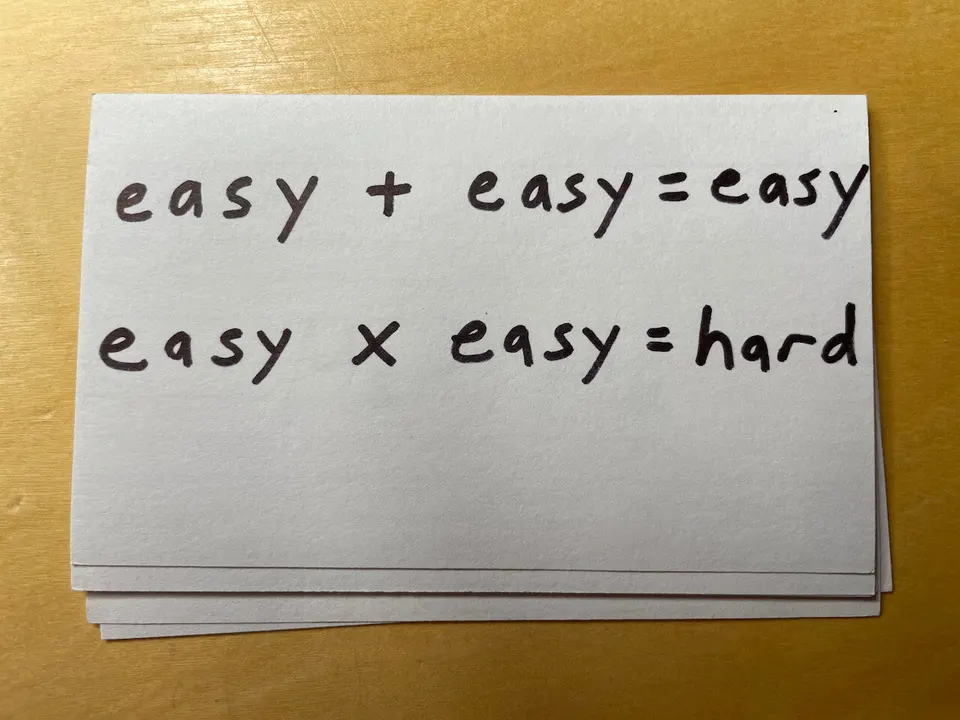
easy + easy = easy, easy x easy = hard
It’s easy to do any number of easy things in succession. They only become hard when you do them simultaneously. Understand and do what you’re capable of.
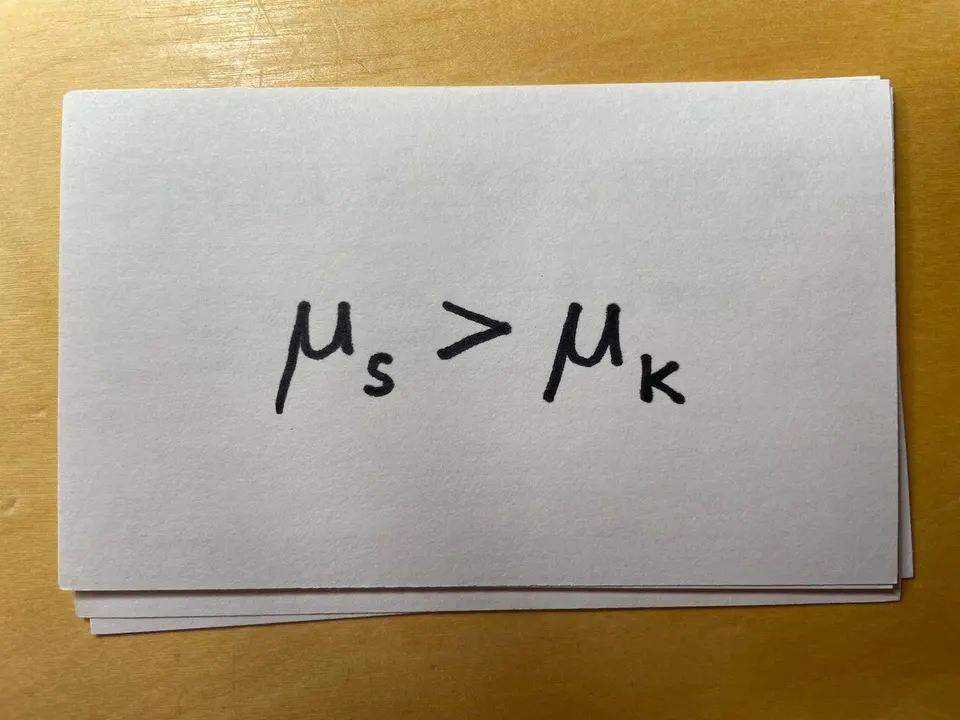
Friction of an object is greater when static than when in motion.
Start moving.
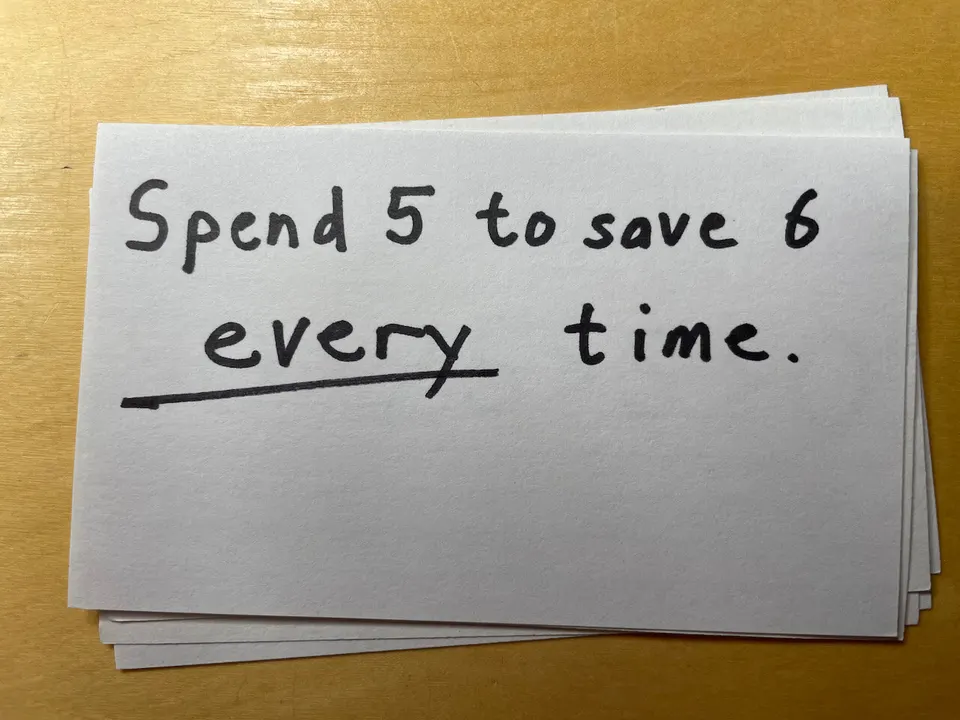
Spend 5 to get 6 every time.
A lot of times, it takes hard analysis to decide whether something is worth doing over the long run. Principles of discounting and opportunity and marginal costs abound. Here’s one you don’t have to think about: 20%. If you’ll get a free 20% out of doing something, just do it. It will be worth the hassle, promise.
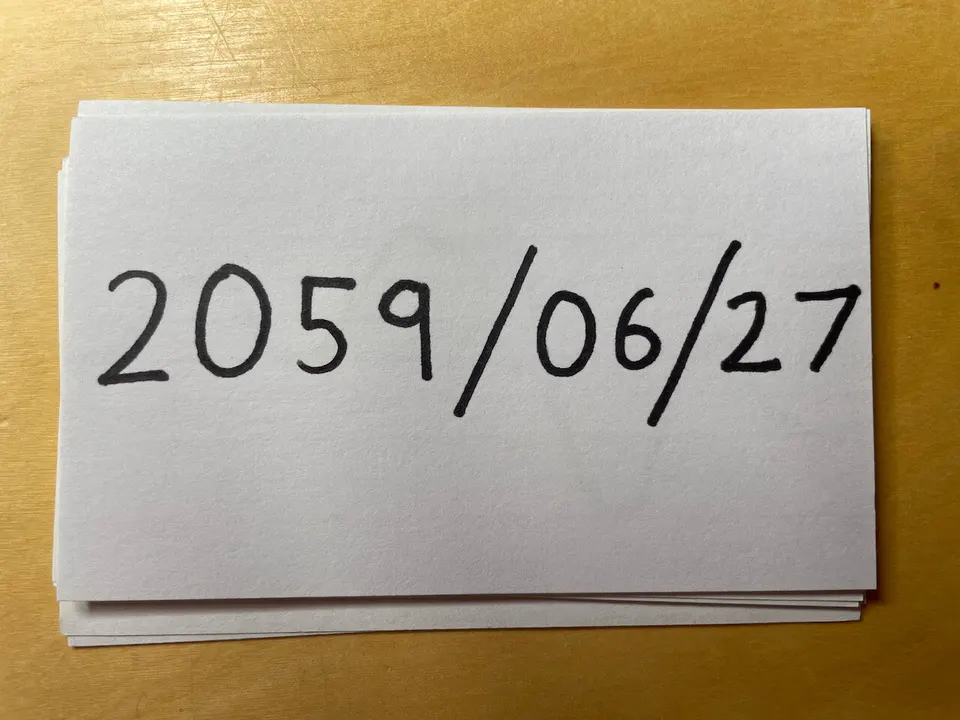
2059/06/27
The day I turn 70. A day when most of the people I know and care about will be dead or seriously diminished, including myself. It’s coming. Act like it.
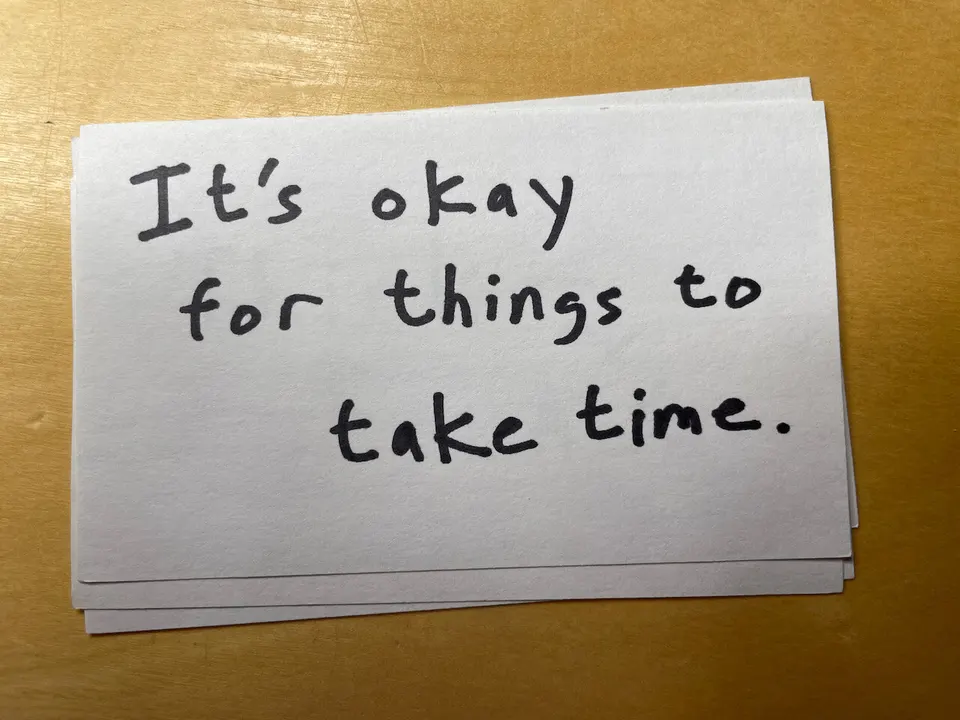
It's okay for things to take time
A lot of the time they do! You’ve got a bunch of it left. Spend it judiciously, but spend it.
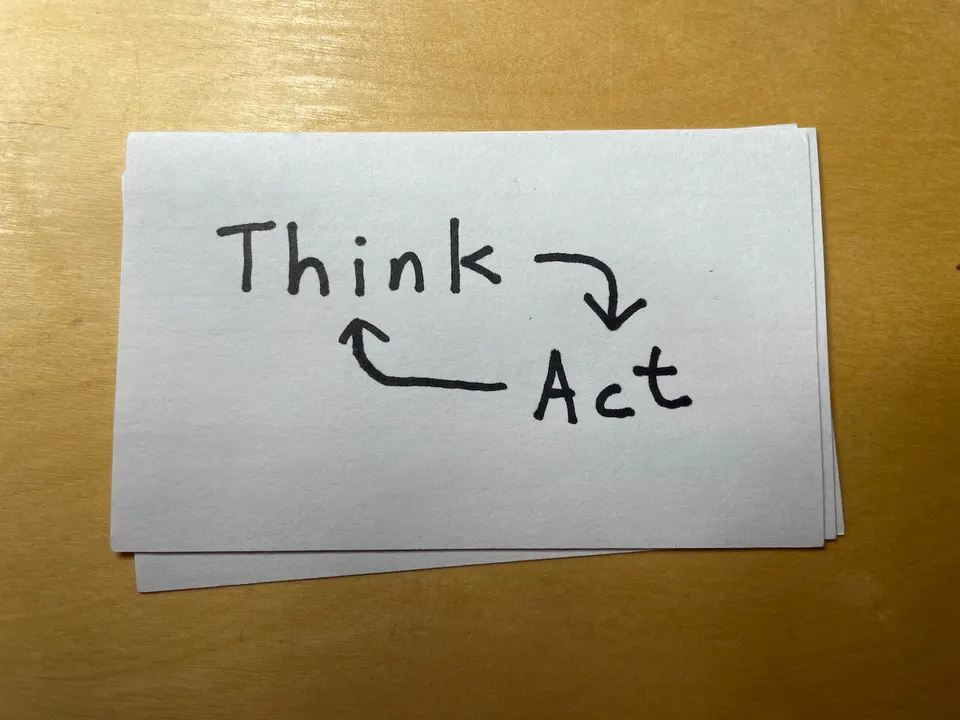
Think then act then think
When you have an idea, test it. When you come to a crossroads, reflect on it. Thinking makes acting easier; acting makes thinking easier. Switch.
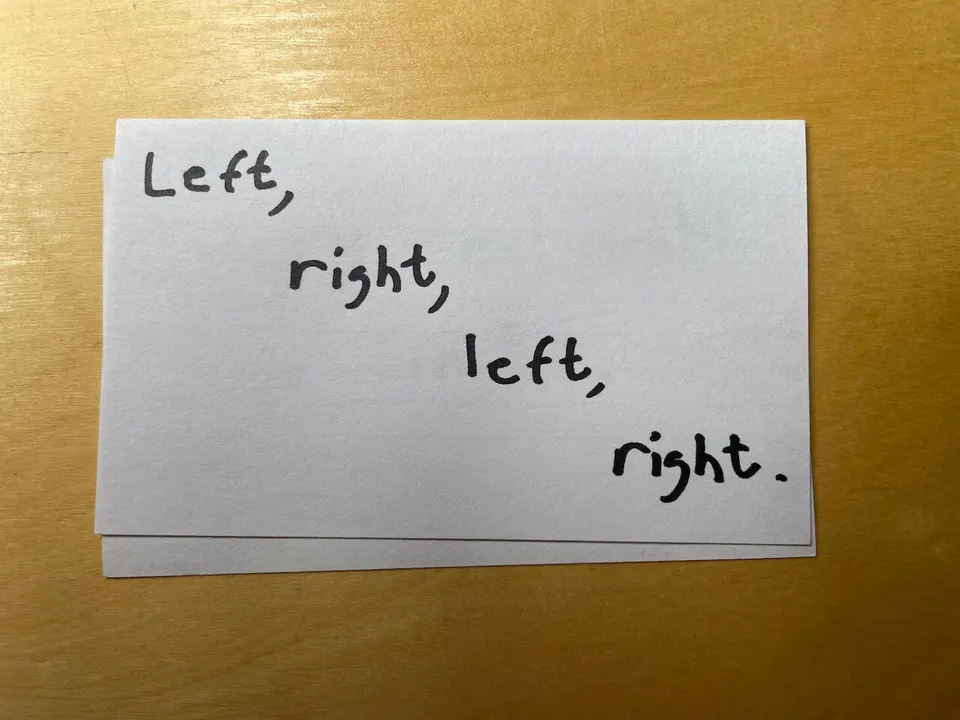
Left, right, left, right
There’s like a thousand sayings underneath this one about mountains and foundations and planting trees. Put in the work, one foot in front of the other.
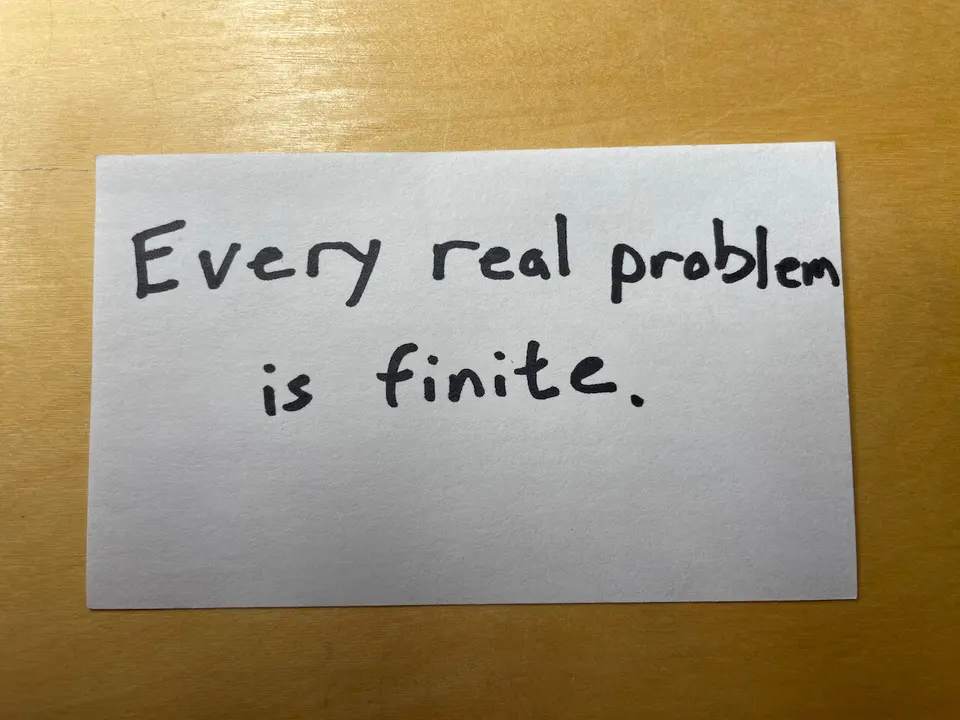
Every real problem is finite.
Every issue worth caring about can be broken down and traced back to a conceivable set of steps, however challenging they may be to climb. Fractal problems should be identified and judiciously ignored.